
DANIEL MATTAR
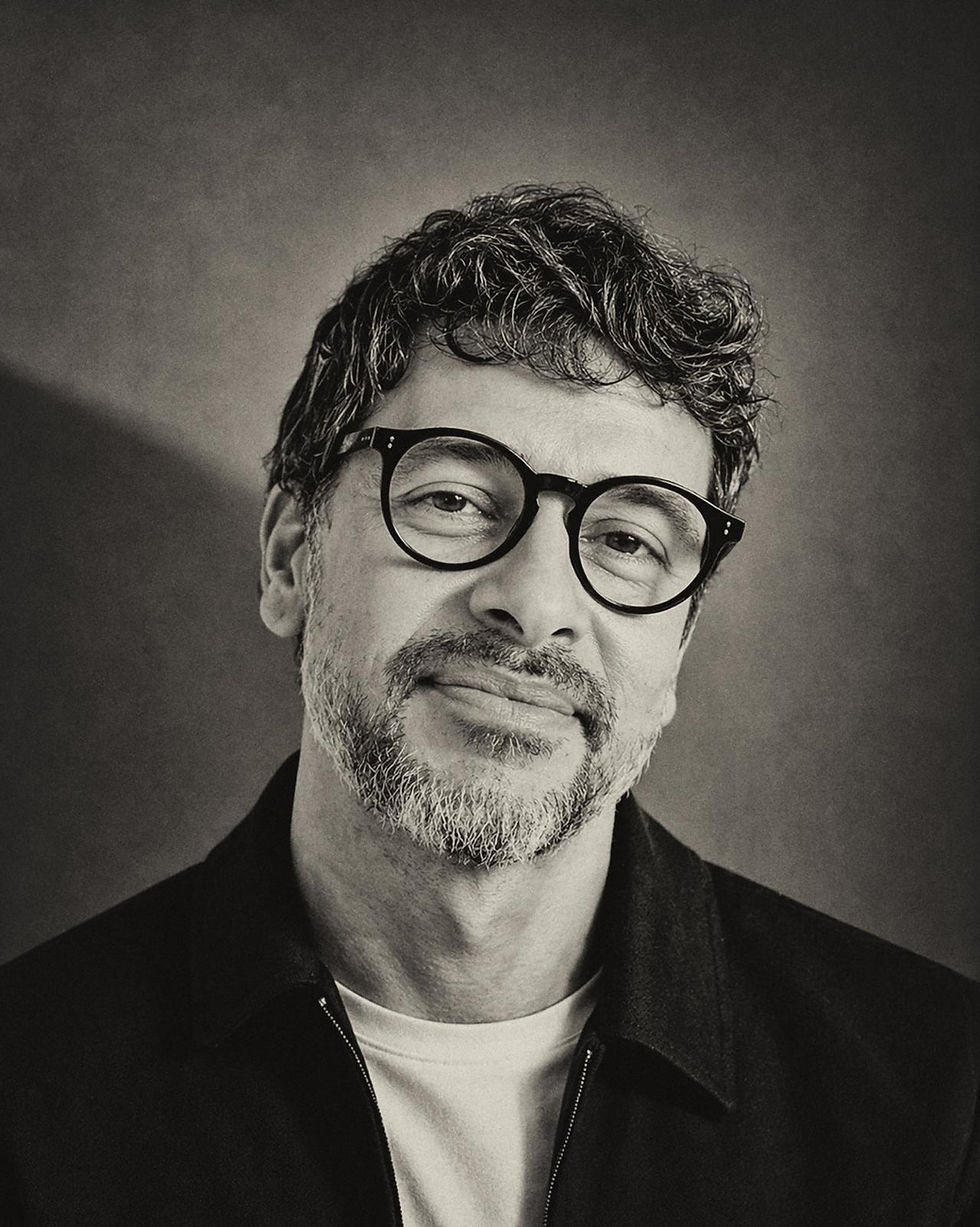
Daniel Mattar was born in Rio de Janeiro in 1971. From early on, Mattar realized that photography offered a possibility for artistic expression, leading him to pursue a course in Art & Design at PUC-Rio, where he immersed himself in photography.
In the early 1990s, he spent some time in Japan, where he began researching Zen Buddhism and Japanese calligraphy, incorporating them into his photographic work.
Mattar discovered a personal path in portrait photography, launching a highly successful career that lasted nearly 30 years. It is worth noting that Daniel belongs to the last generation of photographers who experienced their art as manual work, without the many post-production technologies available today. He dedicated himself profoundly to studying technique and found his greatest curiosity and talent in lighting.
In 2018, Daniel exchanged the luminous Rio de Janeiro for the luminous Lisbon, where he expanded his artistic research, working with different scales, from micro to macro, photographing pigments on small surfaces, creating three-dimensional compositions, and contemplating light and shadow.
Mattar rethinks the relationship between photography, painting and sculpture, playing with the interstice spaces that infiltrate between each of the media. To transition from a pictorial image to a photograph and then to an object, Daniel Mattar deploys a range of diverse techniques, generally starting from found materials, on which he uses a painting gesture, before photographing the result to reprint it then in large format. He thus recycles everyday images and materials which he covers with a thick layer of oil paint before photographing the result and then producing a large format photograph.
Mattar has held solo and group exhibitions since 1988, including the Museum of Modern Art of Rio de Janeiro (MAM-RJ), the Banco do Brasil Cultural Centre (CCBB), the Sergio Porto Cultural Space and the Deji Art Museum, which acquired the Photographic Drawings series for its collection. His works are in important private collections in Brazil, the USA, Europe and Asia.
ARTWORKS


